
Artificial Intelligence takes a seat in the Boardroom
- Pedro Gato Andeyro
- Nov 10, 2025
- 3 min read
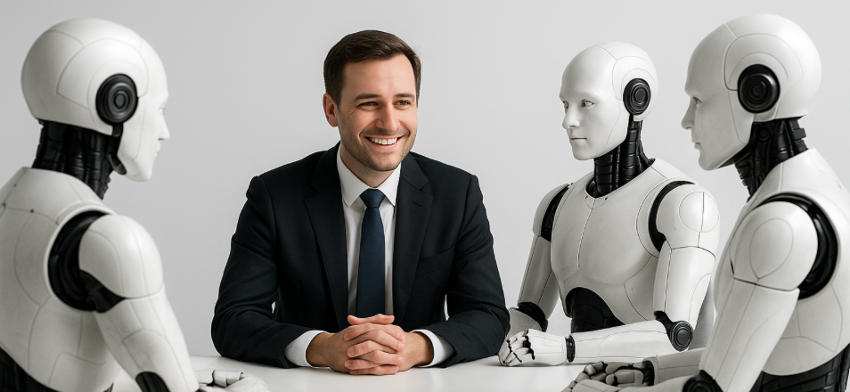
For decades, the role of the Board of Directors has centered on its non-delegable duties: approving the company’s strategy, overseeing the chief executive, and ensuring the continuity and proper governance of the business. However, the emergence of Artificial Intelligence is beginning to profoundly transform the way Boards fulfill these responsibilities.
Far from being just another operational tool, Artificial Intelligence has become a new instrument of impact within the Corporate Governance System. Its influence is already visible in critical areas such as risk management, the quality of board deliberations and decision-making, and the overall efficiency of the Board’s functioning.
The first major transformation lies in the ability to anticipate risks. The speed of economic, regulatory, and technological change has outpaced traditional oversight mechanisms. AI enables the analysis of millions of data points in real time, detecting early warning signals that would previously have gone unnoticed. This does not replace human judgment, but it allows Boards to adopt a more dynamic, predictive, and strategic outlook. Imagine a dashboard highlighting potential cyber, sustainability, or reputational risks before they materialize. The challenge is no longer access to information, but the ability to interpret it with discernmentand responsibility. AI does not replace prudence, it amplifies it.
The second transformation directly affects the quality of decision-making. Until now, Board deliberations have relied on static information: finalized reports, summarized presentations, and conditional forecasts. Artificial Intelligence introduces a new dynamic, generating alternative scenarios, simulations, and contrasts that enable directors to question their own assumptions. This potential demands new competencies. Directors must understand how models function, what biases they may contain, and to what extent their recommendations can be interpreted. The future of corporate governance will blend intuition and augmented analysis, forging an alliance between human experience and algorithmic intelligence.
The third area of transformation relates to the efficiency of the Board’s internal processes. AI-based tools can automate document classification, synthesize financial reports, or identify inconsistencies in ESG disclosures. These solutions free up time and energy for what truly matters: thinking, debating, and deciding. A more agile Board is not necessarily a more technological one, but rather one that is more focused on its purpose. When properly integrated, technology does not dehumanize governance, it restores space for collective reflection and strategic thought.
All this gives rise to a new challenge: the governance of Artificial Intelligence itself. Many Boards still do not feel prepared to oversee the strategic and ethical use of these technologies, yet the responsibility is already upon them. AI must become part of the Corporate Governance System, embedded in risk or audit committees, internal policies, and the ongoing education of directors and executives. Governing AI does not require mastering its technical complexity, but ensuring that its use remains aligned with the organization’s purpose, values, and long-term interests.
Added to this is the ethical dimension: the dilemmas that AI introduces into decision-making and accountability. Issues of responsibility, transparency, and the social impact of algorithmic decision-making within governance systems deserve focused analysis, an issue I will address in an upcoming article.
Artificial Intelligence is not merely a challenge; it is an opportunity to strengthen the legitimacy and relevance of Boards. Those that learn to integrate it with discernment and integrity will enhance their capacity for anticipation, transparency, and sustainable value creation.
The Boards of the future will not be those that best understand technology, but those that can turn information into wisdom and innovation into trust. Artificial Intelligence offers a unique opportunity to rethink how we decide, how we oversee, and above all, how we serve the purpose of the organizations we govern. The challenge is no longer to adapt to AI, it is to lead with it.


Comments